



PHP Full Course – Learn PHP from Beginner to Advanced
-
 By
coursesoftsolution
By
coursesoftsolution
- 13/Feb/2026
- 6 Students
Course Description
If you want to learn how modern dynamic websites work and how PHP developers build dynamic web apps, this full PHP course offers a great start. PHP is a widely used server-side programming scripting language. It powers millions of websites and web applications worldwide. In this course, you will learn PHP programming step by step in simple and easy language, even if you have no prior coding experience.
This course helps beginners learn the basics of PHP web development. It then moves to more advanced topics. These include object-oriented programming, database integration, and real-world web app development. By the end of the course, you will have the skills needed to create dynamic websites and work with databases using PHP and MySQL.
PHP is an essential technology for anyone interested in web development, backend programming, or full-stack development. Many popular platforms and systems use PHP, including content management systems, e-commerce platforms, and web portals. Learning PHP lets you build powerful web apps. These apps can use databases, process user data, and create dynamic content.
What You Will Learn in This PHP Course
This course covers all the essential topics needed to become confident in PHP programming. The lessons follow a clear, logical order. This helps you understand each concept before you move to the next topic.
You will start with basic PHP concepts. You will learn how PHP works. You will see how it runs on the server side.
You will learn how it works with HTML. It helps create dynamic web pages. You will learn about PHP syntax, variables, and data types, which are the building blocks of any program.
Once you understand the fundamentals, the course moves into control structures such as conditional statements and loops. These concepts allow you to control the flow of your program and perform tasks based on conditions or repeated actions. You will practice using if statements, if-else conditions, for loops, while loops, and foreach loops.
The course also introduces arrays and functions, which are important for organizing and managing data efficiently. You will learn how to create and use arrays, store multiple values, and process data easily. Functions help you reuse PHP code and make your programs more structured and maintainable.
Working with Forms and User Input
A major part of web development involves interacting with users. In this course, you will learn how to create HTML forms and process form data using PHP. You will understand how the GET and POST methods work and how PHP receives and processes data from users.
You will also learn about PHP superglobal variables. They access user input, server information, and request data. Understanding these concepts is essential for building interactive websites where users can submit data through forms.
Cookies and Sessions
To build modern web applications, you must understand how to manage user data across multiple pages. This course explains cookies and sessions in PHP and shows how they store user information and maintain login states.
You will learn how cookies store data in the browser and how sessions store data on the server. Authentication systems, user accounts, and personalized web experiences widely use these concepts.
PHP and MySQL Database Integration
One of the most powerful features of PHP is its ability to work with databases. In this course, you will learn how PHP connects to a MySQL database and performs operations on stored data.
You will learn how databases work. You will also learn to create tables and insert records. You will learn to update information, retrieve data, and delete records. People know these operations as CRUD operations (Create, Read, Update, Delete).
You will build simple database-driven applications where PHP communicates with MySQL to store and display information dynamically. This knowledge is key for building real-world web apps.
These include login systems, content management systems, and management dashboards.
Object-Oriented Programming in PHP
After you learn the basics, the course introduces object-orientated programming (OOP) in PHP. It is a modern approach used in professional development.
You will learn key OOP concepts such as:
-
Classes and objects
-
Constructors and destructors
-
Access modifiers (public, private, protected)
-
Inheritance
-
Class constants
-
Abstract classes
-
Interfaces
-
Traits
Static methods and static properties
These concepts help developers build structured, reusable, and scalable applications. Understanding OOP is important if you want to work with advanced PHP frameworks or build large applications.
Namespaces and Code Organization
As applications grow, managing code becomes more complex. This course explains PHP namespaces, which help organize code and prevent naming conflicts between classes and functions. Modern PHP development widely uses namespaces, and they play an important role in building modular applications.
Database Keys and Data Relationships
To design efficient databases, you must understand how tables are structured and how data relationships work. This course explains important database concepts such as:
-
Primary keys
-
Foreign keys
-
Unique keys
These concepts ensure that data are organized correctly and that relationships between tables are maintained properly.
Hands-On Learning Approach
This course focuses on practical learning and real examples rather than just theory. Each topic includes explanations and examples that help you understand how PHP works in real-world scenarios.
You will practice writing code, creating database connections, processing user input, and building small applications step by step. This hands-on approach helps you develop confidence in writing PHP code and solving problems.
Who This Course Is For
This course is suitable for a wide range of learners who want to develop web development skills. It is especially useful for:
-
Beginners who want to learn PHP programming language from scratch
-
Students interested in web development and backend programming
-
Developers who want to understand server-side scripting
-
Freelancers who want to build dynamic websites
-
Anyone who wants to learn how websites interact with databases
No prior programming experience is required to start this course. The text explains everything in simple, easy-to-understand language, so beginners can easily access it.
Skills You Will Gain
After completing this PHP development course, you will be able to:
-
Understand how server-side programming works
-
Write PHP scripts to create dynamic web pages
-
Process user input from forms
-
Work with cookies and sessions
-
Connect PHP with MySQL databases
-
Perform CRUD operations in databases
-
Use object-oriented programming concepts in PHP
-
Organize code using namespaces and reusable components
These skills are essential for building dynamic websites and web applications.
Why Learn PHP
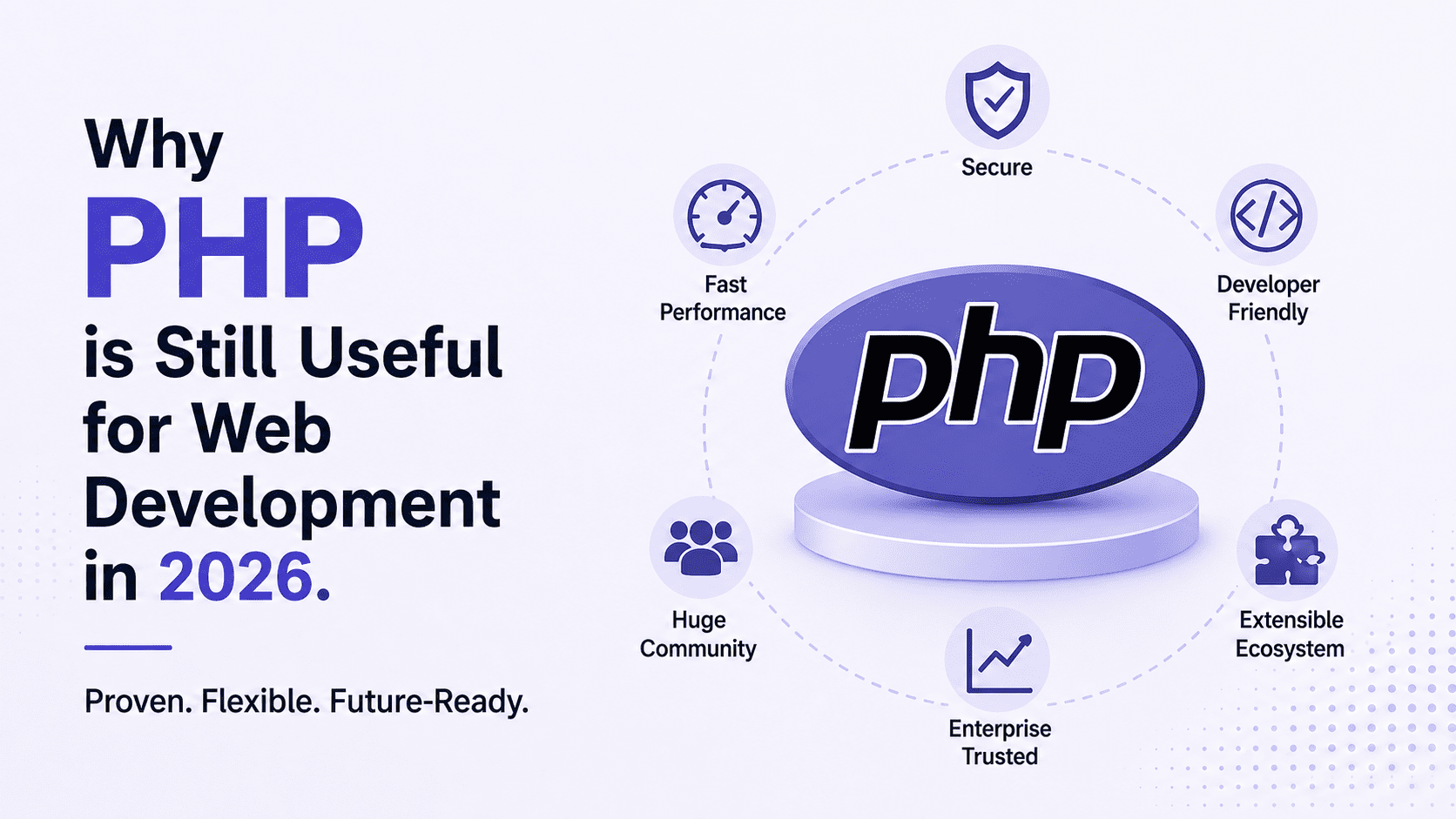
PHP remains one of the most popular programming languages for web development. Many websites and applications still rely on PHP because it is powerful, flexible, and widely supported. Learning PHP opens the door to opportunities in backend development, web application development, and full-stack programming.
By learning PHP and how it connects to databases, you can build interactive websites. They can handle user data, manage content, and run complex tasks.
Start Your PHP Learning Journey
The course takes you from basic programming concepts to advanced PHP features and helps you build practical skills you can apply to real projects.
Start learning PHP today and take the first step toward becoming a skilled web developer.
Course Curriculum
-
Database in PHP

-
Introduction to Database Theory (Basic Concepts Explained)
-
How to Create a Database Manually in MySQL (phpMyAdmin / XAMPP)
-
Create Database Using SQL Query in MySQL (phpMyAdmin / XAMPP)
-
Understanding INSERT Query in MySQL (Data Insert Management)
-
How SELECT Query Works in MySQL (Fetch Data From Table)
-
How UPDATE Query Works in MySQL (Update Records with WHERE)
-
Lets Learn How DELETE Query Works in MySQL (Safe Delete with WHERE)
-
Let’s Know About CRUD Operations in PHP MySQL (Create, Read, Update, Delete)
-
How to Connect PHP with MySQL Database
-
Create PHP Form and Insert Data into MySQL (Practical Example)
-
Display (Read) Data from MySQL to Browser Using PHP (Practical)
-
Delete Data from MySQL Table Using PHP (Practical Example)
-
Create Pre-Filled Form to Update Record in PHP MySQL (Practical)
-
Update Data in Database Using PHP (Edit Form + UPDATE Query)
-
Introduction to Object Oriented Programming (OOP) in PHP
-
Practical on Object Oriented Programming in PHP
-
How To Create Objects and Access Data in PHP (Basics with Examples)
-
Let’s Understand Constructors and Destructors in PHP (OOP Basics)
-
How To Call a Constructor Method in PHP (Create Object & Pass Values)
-
Understanding Destructor Method in PHP (__destruct) (OOP Basics)
-
Let’s Learn Access Modifiers in PHP (public, private, protected) – OOP Basics
-
Access Modifiers with Public Methods in PHP (Practical Example)
-
Private Method in PHP Access Modifiers (How It Works + Example)
-
Protected Method in PHP (Access Modifier + Inheritance Example)
-
Inheritance in PHP: Understanding Parent Class and Child Class (OOP Basics)
-
Understanding Inheritance in PHP: Theory + Syntax (OOP Fundamentals)
-
Let’s Understand Inheritance in PHP with Practical Example
-
What is a Constant in PHP Inheritance? (Class Constants + Access in Child Class)
-
Understand Class Constants in PHP with Practical Example (Inheritance Use Case)
-
What is an Abstract Class in PHP? (OOP Concept Explained Clearly)
-
Let’s Do Practical on Abstract Classes in PHP (Real Example + Implementation)
-
Learn Interfaces in PHP: Syntax with Practical Example (OOP)
-
Practical on Interfaces in PHP (Real Example + Implementation)
-
What is a Trait in PHP? (OOP Concept Explained Simply)
-
Understand Traits in PHP with Practical Example (Code Reuse in OOP)
-
About Static Methods in PHP (OOP Basics + Practical Use)
-
Practical on Static Methods in PHP (Call Without Object + Real Example)
-
About Static Properties in PHP (OOP Basics + Real Use Cases)
-
Practical on Static Properties in PHP (Shared Data Across Objects)
-
Practical on Namespace in PHP (Organize Classes + Avoid Name Conflicts)
-
GET vs POST Method in PHP (Difference + Practical Example)
coursesoftsolution
DeveloperI am a web developer with a vast array of knowledge in many different front end and back end languages, responsive frameworks, databases, and best code practices
Frequently Asked Questions
Yes, this course is good for beginners. The page says no prior programming experience is required, and the lessons start from basic PHP concepts before moving to advanced topics.
In this course, you will learn PHP basics, variables, data types, operators, conditions, loops, arrays, functions, forms, superglobal variables, cookies, sessions, MySQL, CRUD, and OOP concepts. The page presents it as a beginner-to-advanced PHP course.
Yes, you can learn PHP from scratch in this course. The page says it is made for beginners and explains topics in simple and easy language, even for people with no prior coding experience.
Yes, this course teaches server-side programming. It explains how PHP works on the server side and how it helps create dynamic web pages.
Yes, this course covers object-orientated programming in PHP. It includes topics like classes, objects, inheritance, abstract classes, interfaces, traits, and static methods.
Yes, this course is designed to help you build dynamic websites. The page says you will learn to process user data, connect databases, and create dynamic content using PHP.
This Course Fee:
₹499.00
Course includes:
-
 Level
Level
-
Beginner
Intermediate
-
 Duration
6h 13m
Duration
6h 13m
-
 Lessons
0
Lessons
0
-
 Quizzes
0
Quizzes
0
-
 Certifications
Yes
Certifications
Yes
-
 Language
-
Hindi
News & Blogs
Our Latest News Feed
Dont Miss Stay Updated with the Latest Articles and Insights